Buying good cameras is only part of the job. A camera may point at a wall, miss a doorway, or fail to capture clear details. Good security camera placement helps you watch the main areas around your home while respecting your family’s privacy. Start with the doors and paths people use most often. Then check for blind spots.
Where Are the Best Places to Install Security Cameras?
Front Door and Porch

Place a doorbell camera or a wall-mounted camera where it can record visitors and packages near the entrance. Try to capture a clear view of people’s faces instead of a wide shot where they look too small. Front door security cameras can also help you check who has arrived when you are not at home. Charleston Security Systems also shares tips on porch camera coverage and package protection.
Driveway and Garage

Place a camera where it can cover parked vehicles and the garage entrance. Try not to point it mainly at the street. At night, check whether headlights make the image too bright to see details. Good outdoor security camera positioning can help keep these areas in view.
Back Door and Backyard
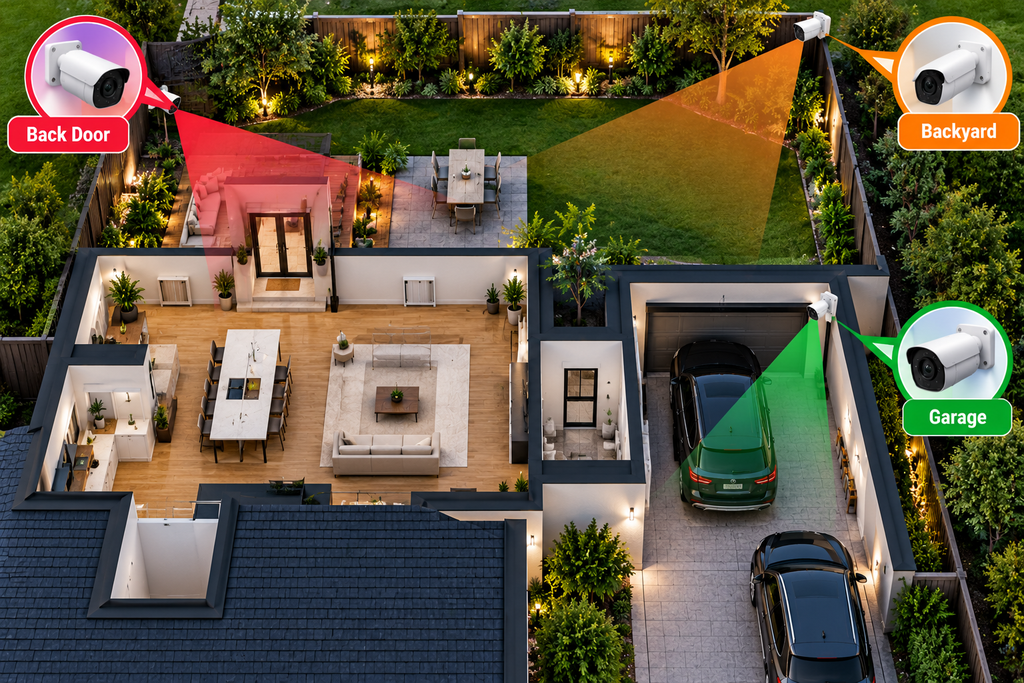
Back doors, patios, and gates can be easy to overlook. Aim cameras at these entry points so you can see who approaches them. Trees, tall fences, and plants may block the view, especially as they grow.
Backyard camera installation should cover the areas people can use to enter the property without recording more of a neighbor’s yard than necessary.
Side Walkways and Other Entrances
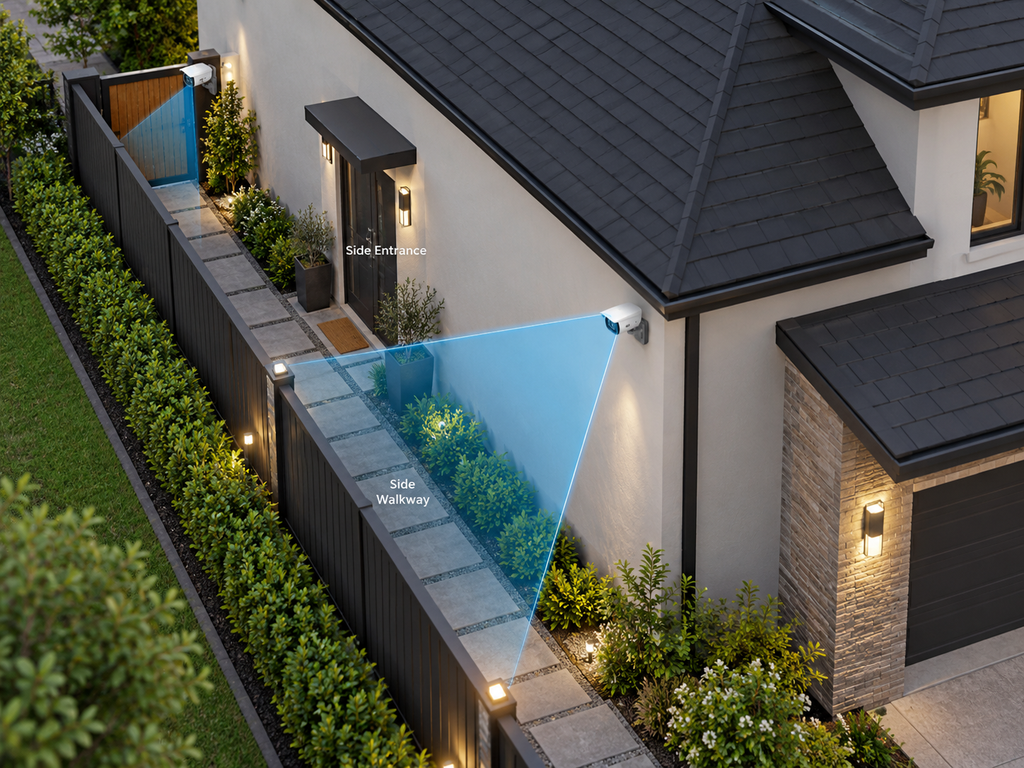
Narrow paths between buildings can leave gaps in your camera coverage. A camera facing along the walkway may catch movement that front and rear cameras miss. If you are unsure where to install security cameras, check these less visible areas along with the main entrances.
How to Plan Your Home Security Camera Placement
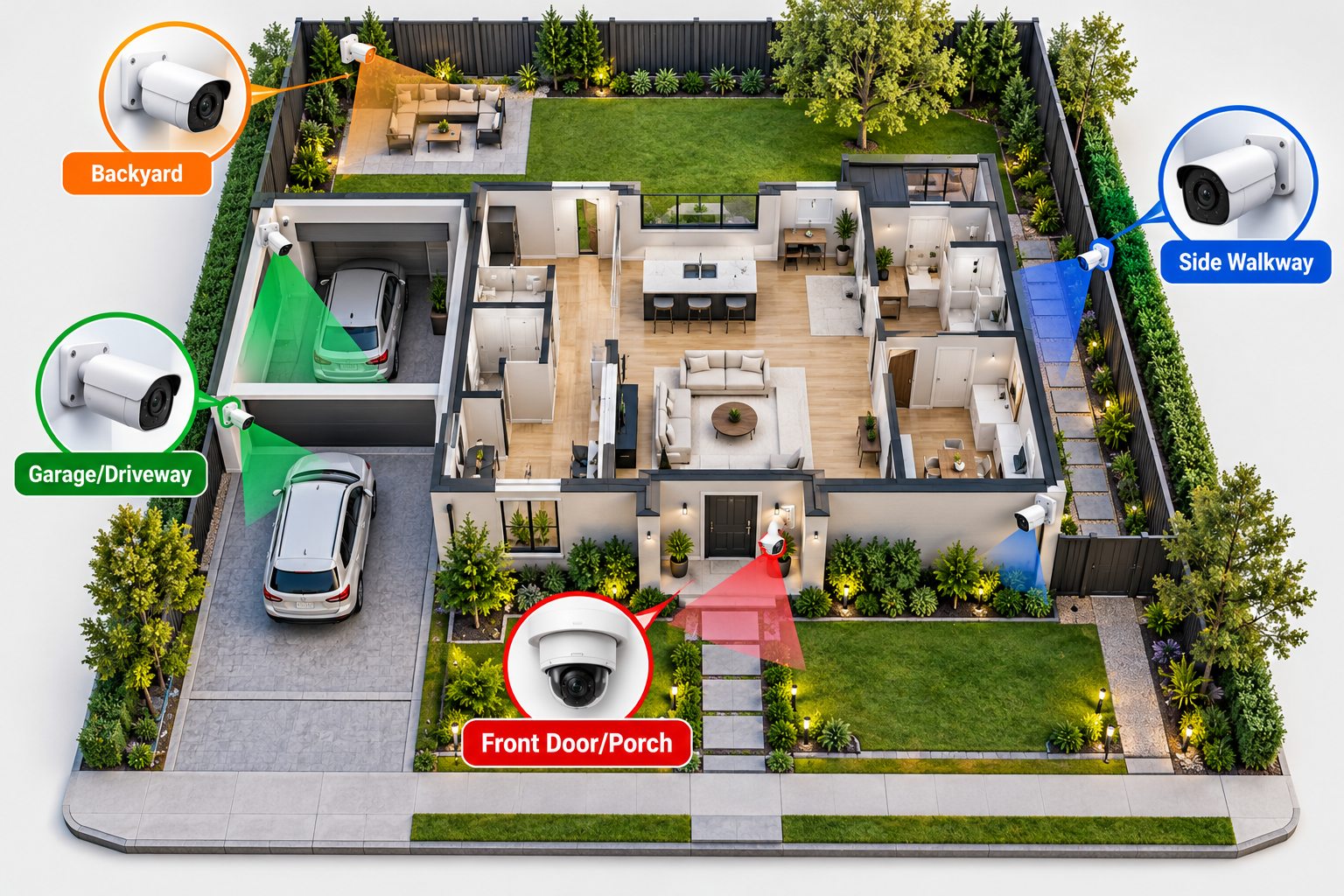
The top-down placement diagram shows four example camera locations. C1 covers the front door, C2 watches the garage and driveway, C3 covers the backyard and back door, and C4 monitors a side passage.
The mounting-angle diagram shows why the camera angle matters. A slightly downward view can capture people approaching an entrance. A camera mounted too high may only record the tops of their heads.
These examples will not work for every home. The right home security camera placement depends on the camera lens, viewing range, and layout of the property. Read this guide to camera lenses and field of view for more details.
How High Should You Mount Home Security Cameras?
Mount cameras high enough to make tampering harder, but not so high that faces become difficult to recognize. A porch camera may need a different height from one covering a wide driveway.
Before fixing the mount in place, check the live view while someone walks toward the camera. Look at the image during the day and after dark. If the details are unclear, adjust the angle, location, lens, or lighting.
What Camera Placement Mistakes Should You Avoid?
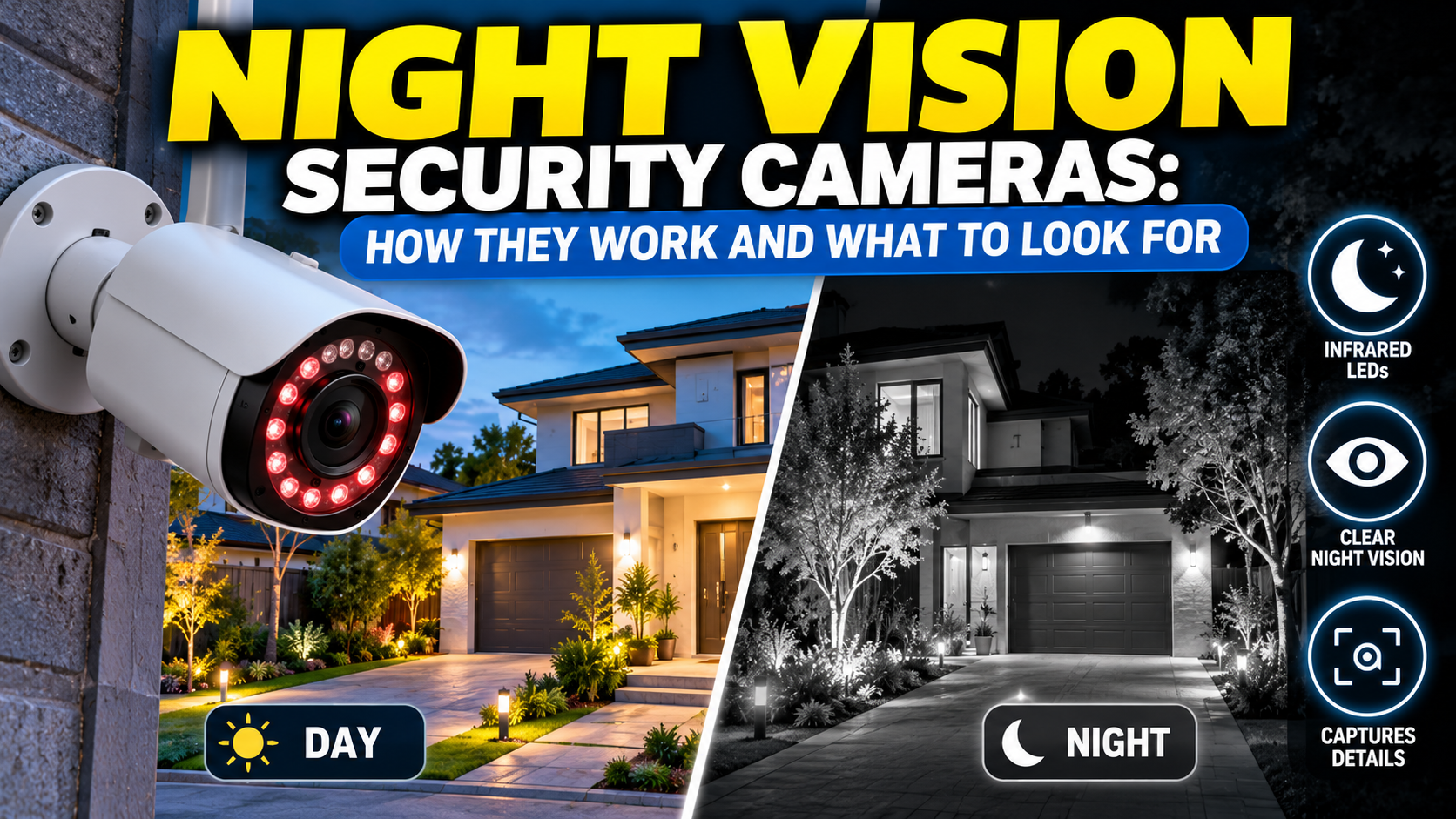
Avoid pointing cameras directly at bright lights, reflective windows, or thick plants. Check that roof edges and outdoor fixtures do not block the image. Night vision can also cause glare when infrared light reflects off nearby walls or glass.
A single wide-angle camera may not show a person’s face clearly from far away. Wide coverage and close-up detail are different needs. In some cases, adding another camera is a better option.
How Can You Protect Privacy When Installing Cameras?
Avoid recording bathrooms, bedrooms, or private areas belonging to neighbors. Check local rules and homeowners’ association requirements before installing cameras, especially if you plan to record audio.
Online access needs protection, too. The Federal Trade Commission recommends strong, unique passwords, software updates, and encryption for connected cameras. Only give access to people who need it.
Can Professional Installation Improve Camera Coverage?
A professional can check entrances, lighting, wiring, and blind spots. They can also test whether the recorded footage shows useful details. Charleston Security Systems provides home security solutions for Charleston and the Lowcountry. Visit Charleston Security Systems to learn more, read its home security system guide, or ask the team about camera positioning.
FAQs
How many cameras does a home need?
It depends on the number of entrances, the property layout, and the areas you want to cover. Comparing the best places for security cameras can help you decide how many you need.
Should outdoor security cameras be visible?
Visible cameras may discourage unwanted activity. Hidden or less noticeable cameras can also be useful. Choose positions that provide good coverage without invading anyone’s privacy.