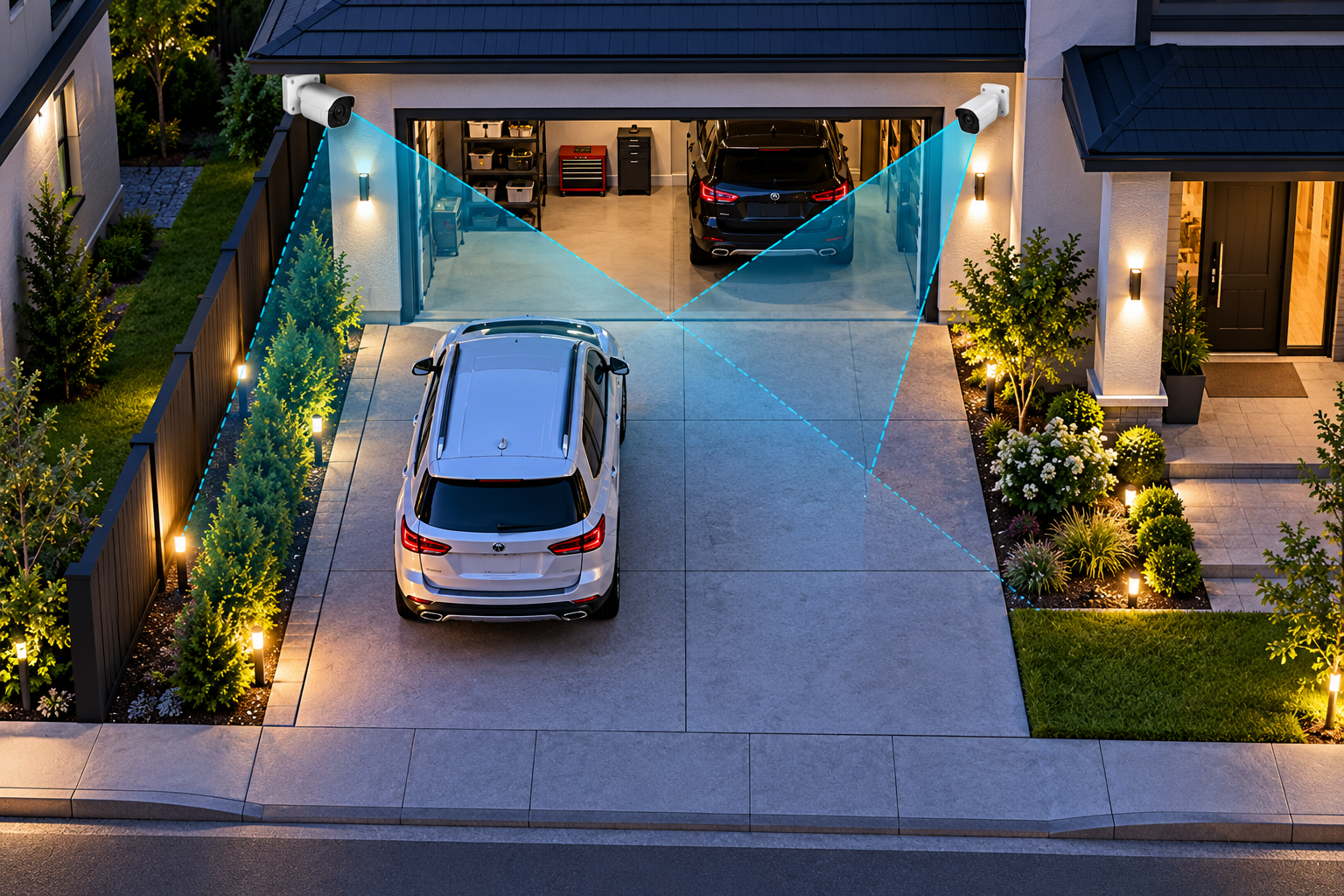
A security camera may give you a clear view during the day, then show a dark or blurry picture at night. That can be a problem when you need to check who came to your door or what happened in your driveway. Night Vision Security Cameras help record these areas after sunset. Some use infrared light, while others need a little visible light to capture color. The right choice depends on where you plan to install the camera and what you need to see.
How Do Night Vision Security Cameras Work?

Most day-and-night cameras adjust to changes in lighting. When the area gets dark, the camera may switch to infrared mode and record in black and white. Small infrared LEDs light up the scene, even though people cannot normally see that light.
The sensor picks up the reflected infrared light and uses it to create an image. As Axis Communications explains in its infrared surveillance guide, infrared cameras are different from thermal cameras, which detect heat rather than reflected light.
What Types of Night Vision Security Cameras Are Available?
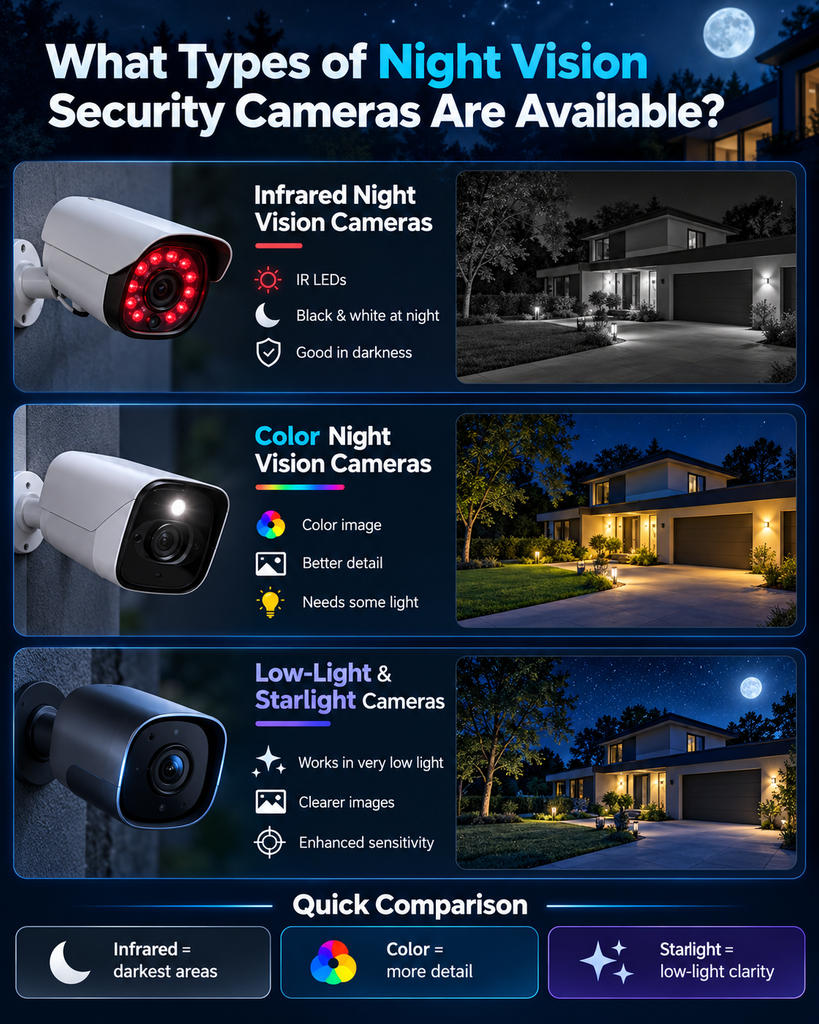
Infrared Night Vision Cameras
Infrared security cameras are common around homes, shops, driveways and gates. They usually produce black-and-white footage at night. Their performance depends on the strength of the infrared light and the distance to the subject. A camera may show movement clearly but struggle to capture facial details farther away. Many night vision CCTV cameras use this technology.
Color Night Vision Cameras
Color night vision security cameras can record color after dark, provided there is enough visible light. Some have sensitive image sensors. Others switch on a spotlight when they detect movement. The extra light can help show a person’s clothing or a vehicle’s color. Outdoor night vision cameras may suit entrances, garages and driveways where color details are useful.
Low-Light and Starlight Cameras
These cameras are designed for places that are dim but not completely dark. A nearby streetlight or porch light may give them enough light to capture useful footage. Results vary by model, though. When the area gets too dark, some cameras switch to black-and-white recording. Low-light surveillance cameras are worth considering if your property has some lighting at night.
Can Night Vision Cameras See in Complete Darkness?
Yes, if the camera has infrared illumination that reaches the area being watched. A color camera that depends on visible light may struggle when no light is available.
Check the security camera night vision range before buying, but do not rely on that figure alone. Distance matters when checking night footage. A person may appear on screen, but can you actually see their face? Rain, movement and poor resolution can make that harder.
Charleston Security Systems’ camera guide explains how camera angles and infrared range affect the view.
What Features Should You Check Before Buying?
Don’t focus on megapixels alone. Check how well the camera works at night and how far it can see. Will it cover your gate or just part of the driveway? Also check weather protection, power and storage.
Want to watch footage on your phone? Make sure the camera supports remote viewing. Check how long it saves recordings, too. You may need to keep a clip before the system deletes it. See Charleston Security Systems’ camera resolution guide for more on picture quality.
How Can You Improve Night Vision Performance?
Look at the footage after dark. If it looks hazy, check the lens first. Dirt may be the problem. Sometimes infrared light reflects off a nearby wall or window instead. Try a different camera angle.
Spiderwebs and moisture can affect the image, too. So can plants growing in front of the lens. Clean the cover and clear anything blocking the view. Axis has more tips in its image troubleshooting guide.
Still can’t see enough? Add a light or try a camera with a spotlight. Then check the recording again.
Why Consider Professional Night Vision Camera Installation?
A camera can have good night vision and still miss something important. It might point away from the entrance or leave a corner uncovered.
Charleston Security Systems helps homeowners in Charleston and the Lowcountry choose cameras and decide where to place them. This can help avoid blind spots around the property.
Yes. They use infrared light, so ordinary outdoor lights aren’t needed if the camera can reach the area.
Some can. They need enough surrounding light or a built-in light to show colors.
Sometimes, but reflections can spoil the picture. Infrared light may bounce off the window. For watching your yard or driveway, installing the camera outside is usually a better choice.